
The effect of perceived hedonic quality

Usability can be broadly defined as quality of use. However, even this broad definition neglects the contribution of perceived fun and enjoyment to user satisfaction and preferences. Therefore, we recently suggested a model taking “hedonic quality” (HQ; i.e., non-task-oriented quality aspects such as innovativeness, originality, etc.) and the subjective nature of “appealingness” into account (Hassenzahl, Platz, Burmester, & Lehner, 2000). In this study, I aimed to further elaborate and test this model.

Read More
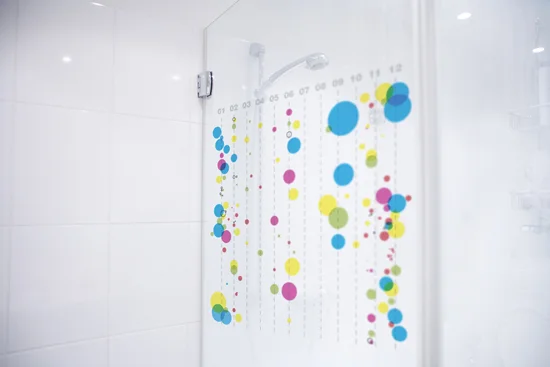
With a little help from a friend: A Shower Calendar to save water

The Shower Calendar is a "persuasive" concept for reducing the consumption of water for showering. It offers a way to foster awareness of water consumption and communication among family members. This ultimately has the potential to result in behavioral change.

Read More
linked. – a relatedness experience for boys

An ethnography-inspired study revealed that teenage boys tend to "squabble" to express and fulfill their need for relatedness and physicality. linked. draws upon this. It is a modular pillow-like device, enabling boys to squabble over a distance, thereby providing a means to experience relatedness in a novel, emotional, but socially appropriate way.

Read More
Dynamics of user experience: How the perceived quality of mobile phones changes over time

The way we use and experience an interactive product is a dynamic process. Surprisingly, only a very small number of studies in the context of Human-Computer Interaction (HCI) attempt to track and explain changes in behavior and experience over time. The present paper introduces CORPUS (Change Oriented analysis of the Relationshipbetween Product and USer), an interview technique to reconstruct changes in user experience over a period of morethan one year.

Read More
Tickboard

If it comes to music, experiences are central. Concert "industry" is constantly rising. In 2009, people were willing to pay an average of$64 to see a top 100 act in the US, that is, to pay for an event, which is typically consumed in less than three hours. Such experiences get a good part of their positivity from personal meaning and re-experiencing.

Read More
Experience Design on NordiCHI 2010

Sarah Diefenbach, Matthias Laschke, Claudia Nass from our cooperation partner IESE, and from the Daniel UllrichTechnical University Darmstadt will present on this year's NordiChi 2010 in Iceland. Monday, October 18., 11:00: DESIGNi – A Workbench for Supporting Interaction Design by Claudia Nass, Kerstin Klöckner, Sarah Diefenbach, Marc Hassenzahl. This is a result of the FUN-NI project.

Read More